
11 min read
TL;DR: – Beeswax wraps ($38 upfront) replace ~$180/year in plastic wrap – payback in under 3 months
- Concentrated refillable cleaners cost $0.08/use vs. $0.22/use for single-use bottles (40–60% cheaper)
- LED bulbs save ~$120/year across 20 bulbs; smart thermostats average $180/year in energy savings
- Greenwashing is rampant: only B Corp, FSC, GOTS, and Cradle to Cradle certifications are third-party verified
- Best for: eco-conscious consumers aged 25–45 who want environmental impact without wasting money on overpriced or underperforming products
What Makes a Sustainable Product Actually Worth Buying?
Not every green product delivers real value. The difference between a smart investment and wasted money comes down to three things: measurable environmental impact, honest cost payback, and durability that justifies the upfront price.
Here's the reality: 49% of consumers want to make environmentally sound choices but are unwilling to pay extra for this benefit. That's not laziness – it's rational. If a "sustainable" product costs 3x more and breaks in six months, it's not sustainable. It's a waste of money and resources.
The products worth buying pass this three-point test:
1. Environmental Impact: Does it measurably reduce waste, energy, or emissions? Look for third-party verification – not just marketing claims.
2. Cost Payback: How long until savings offset the upfront cost? Products with payback periods under 18 months are generally solid investments.
3. Durability: Will it actually last long enough to deliver that payback? Cheap reusables that fall apart after a year defeat the purpose.
For a broader look at what separates genuinely sustainable products from gimmicks, Green Living Guy's comprehensive guide to sustainable living products offers useful context on materials and design approaches that hold up to scrutiny.
Key Takeaway: Sustainable products are worth buying when they have a payback period under 18 months, third-party environmental certification, and documented durability of 2+ years.
Kitchen and Food Storage: Highest ROI Swaps
Your kitchen is where sustainable swaps hit hardest. You're replacing items constantly – plastic wrap, zip-lock bags, paper towels – so switching to reusables compounds savings fast.
Reusable Food Wraps and Bags
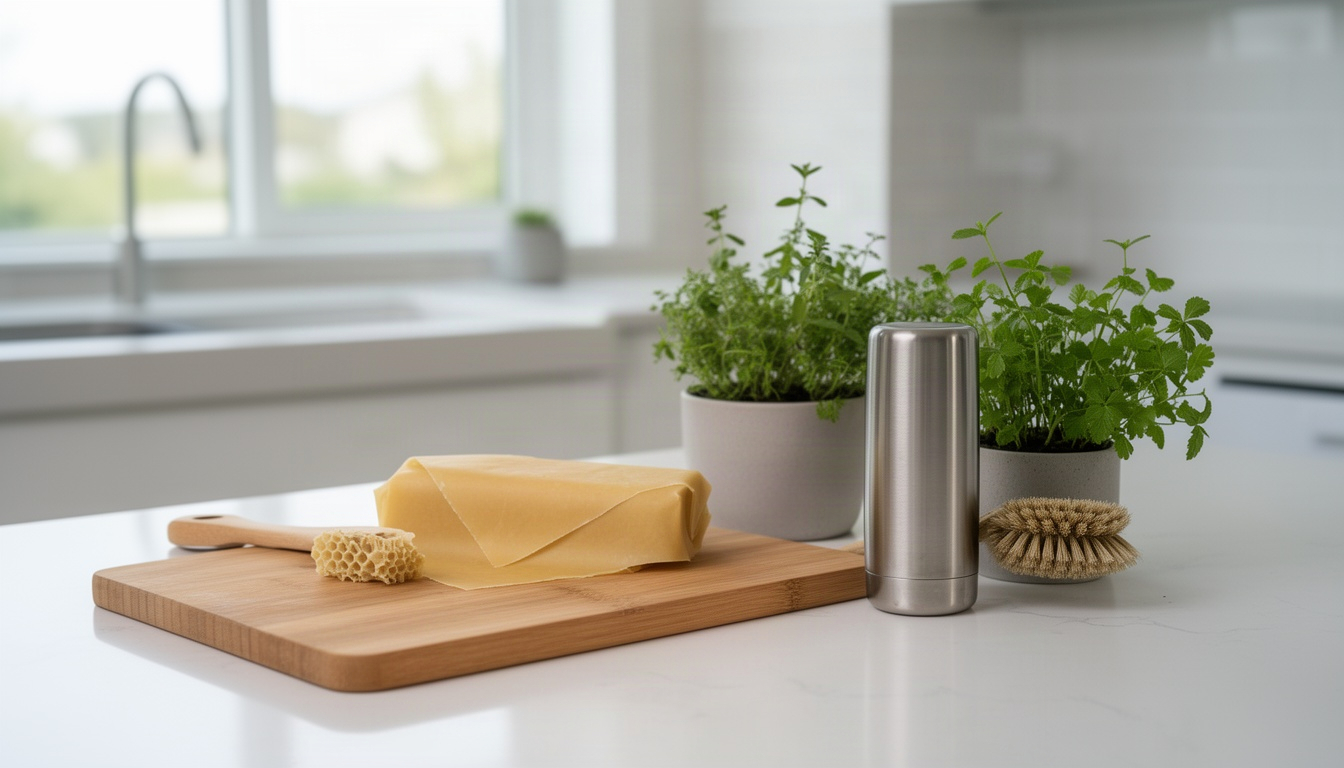
Beeswax wraps are the poster child for high-ROI sustainable products. A set of three wraps costs around $38. Compare that to what you actually spend on plastic wrap annually.
The math is simple. If you buy a roll of plastic wrap every 2–3 weeks at ~$3 per roll, that's roughly $50–$75 per year. But here's the catch: you're also replacing it constantly because it tears, sticks to itself, and gets thrown away. Reusable food wraps, including beeswax-coated cloth, can replace hundreds of feet of single-use plastic wrap annually and typically last 1–2 years with proper care.
Payback calculation: $38 upfront ÷ $180/year in plastic wrap replacement = payback in under 3 months. After that, you're saving $150+ annually.
The downside? Cleaning takes an extra 30 seconds. Beeswax wraps need hand-washing and air-drying – no dishwasher. For most households, that's a trivial trade-off.
Silicone storage bags cost $11–$20 per bag but replace hundreds of single-use zip-locks over their 3–5 year lifespan. One household using 10 bags per week at $0.15 per bag spends ~$78/year on disposables. A $15 silicone bag pays for itself in 3 months and lasts years.
The honest limitation: silicone bags cannot be recycled through standard municipal programs. Specialized facilities are required, which are rare in most U.S. regions. Plan for long-term storage or donation rather than recycling.
Water Filtration vs. Bottled Water
A Brita pitcher filter costs $25–$40 upfront. The math here is even more dramatic.
Brita filtered water costs about $0.25 per gallon vs. $1 to $2 for bottled water. For a family of four drinking 1 gallon per person daily, that's 4 gallons/day × 365 days = 1,460 gallons/year.
- Bottled water: 1,460 gallons × $1.20/gallon = $1,752/year
- Filtered water: 1,460 gallons × $0.25/gallon = $365/year
- Annual savings: $1,387
Your $35 pitcher pays for itself in 10 days. After that, you're saving $1,300+ annually while eliminating ~500 plastic bottles from your waste stream.
Key Takeaway: Kitchen reusables (beeswax wraps, silicone bags, water filters) have payback periods under 3 months and save $1,000+ annually for families. Cleaning time is the only real trade-off.
How Do Sustainable Cleaning Products Compare on Cost?
Direct answer: Concentrated refillable cleaners cost 40–60% less per use than single-use plastic bottles and eliminate ~30 plastic bottles per year per household.
This is where the math gets compelling. The average American household uses about 30 single-use plastic cleaning product bottles per year. That's 30 bottles destined for landfills or recycling streams.
Concentrated refill systems work like this: you buy a reusable glass or aluminum bottle once ($15–$25). Then you buy refill tablets or concentrate packets at approximately $2.49 per tablet, each making one 20oz bottle of cleaner.
Cost-per-use comparison:
- Concentrated cleaner: $2.49 ÷ 20 uses = $0.12 per use
- Name-brand spray bottle (e.g., Windex): ~$4.50 ÷ 20 uses = $0.23 per use
- Savings: 48% cheaper per use
Over a year, if you use 2 bottles of cleaner per week (104 bottles), you're looking at:
- Concentrated system: 104 × $0.12 = $12.48/year (plus initial bottle cost)
- Single-use bottles: 104 × $0.23 = $23.92/year
The honest limitation: some concentrated formulas are less effective on heavy grease or baked-on food. You may need a stronger degreaser for kitchen stovetops. But for general-purpose cleaning, bathrooms, and windows, concentrated refills work fine.
Refillable cleaning systems offer similar cost-per-use advantages while eliminating plastic bottle waste. All three eliminate the plastic bottle waste while cutting cost per use by roughly half.
Key Takeaway: Switching one household to concentrated refillable cleaners eliminates 30 plastic bottles annually and saves ~$12/year per household – modest savings, but massive waste reduction.
Personal Care and Bathroom: Products That Last Longer
Personal care is where sustainable swaps compound over time. You're buying razors, toothbrushes, shampoo, and deodorant constantly. Small per-unit savings add up fast.
Zero-Waste Hair and Skin Care
Shampoo bars typically cost $8–$15 and last 50–80 washes, equivalent to 2–3 bottles of liquid shampoo. That's roughly 30–50% savings per wash compared to conventional liquid shampoo.
The transition is the barrier. Your hair may feel different for the first 2–4 weeks as it adjusts to concentrated formula. Some people experience buildup; others find their hair cleaner than ever. It's genuinely unpredictable. But if you stick past week 4, most users report better results and lower costs.
Bamboo toothbrushes cost $3–$6 each. They're compostable – except the nylon bristles aren't. While bamboo handles can be composted, most bamboo toothbrushes use nylon bristles that must be removed before composting. This is an important honest trade-off: you're not getting a fully compostable product unless you manually remove bristles. Electric toothbrush heads have the same problem.
Dental and Body Care Swaps
Safety razors are the highest-ROI personal care swap. A safety razor handle costs approximately $35. A 100-pack of double-edge blades runs $10–$15 on Amazon, lasting most people well over a year.
Annual cost comparison:
- Safety razor: $35 handle (one-time) + $12/year in blades = $47/year (after year one: $12/year)
- Disposable cartridge razor (e.g., Gillette Fusion5): ~$4–$6 per cartridge, replacing every 5–7 shaves = $80–$120/year
Payback: 5–7 months. After that, you're saving $68–$108 annually.
The barrier is learning curve. Your first shave with a safety razor will likely be awkward. You need to learn the correct angle (30 degrees), pressure (light touch), and stroking technique. Most people need 2–4 weeks to get comfortable. But once you do, the cost savings are permanent.
Refillable deodorant sticks cost $8–$12 upfront, then $3–$5 per refill. Conventional stick deodorant costs $3–$5 per stick and lasts 2–3 months. Over a year, refillable systems save $10–$20 while eliminating plastic packaging.
Key Takeaway: Personal care swaps (safety razors, shampoo bars, refillable deodorant) save $50–$100 annually per person with 2–4 week adjustment periods. The payback is fast; the barrier is habit change.
Are Big-Ticket Sustainable Home Products Worth the Investment?
Direct answer: Some are, some aren't – it depends entirely on your usage patterns and local incentives.
LED bulbs are the no-brainer. At ~$3 per bulb, replacing 20 incandescent bulbs costs $60 upfront. LED bulbs use at least 75% less energy and last 25 times longer than incandescent lighting.
Savings calculation: 20 bulbs × 10W each × 3 hours/day × 365 days × $0.16/kWh (national average) = ~$120/year in electricity savings. Payback in 6 months. After that, you're saving $120 annually for 25 years.
Smart thermostats are more nuanced. ENERGY STAR certified smart thermostats can save about $180 per year on heating and cooling costs. A smart thermostat costs $150–$250.
Payback calculation: $200 device ÷ $180 annual savings = 13–17 months payback.
The catch: savings vary dramatically by climate, existing HVAC system age, and how disciplined you are about programming. A 10-year-old furnace in Minnesota will see bigger savings than a new system in Florida. Renters may need landlord permission, which complicates adoption.
| Product | Upfront Cost | Annual Savings | Payback Period | Worth It? |
|---|---|---|---|---|
| LED bulbs (20) | $60 | $120 | 6 months | Yes |
| Smart thermostat | $200 | $180 | 13 months | Probably |
| Energy Star refrigerator | $1,200 | $80 | 15 years | No |
| Solar panels (5kW) | $12,000 | $1,200 | 10 years | Maybe |
Solar panels and heat pumps are long-term plays. Pairing them with sustainable home improvements can maximize your overall return. They make financial sense if you plan to stay in your home 10+ years and have access to federal tax credits (currently 30% in the U.S.). Without incentives, payback stretches to 12–15 years, which is risky if you might move.
For EV buyers, the math is stronger. Federal tax credits up to $7,500, state incentives, and lower fuel costs create faster payback. Green Living Guy's resources can help you navigate local incentives and total cost of ownership.
Key Takeaway: LED bulbs and smart thermostats have payback periods under 18 months and are solid investments. Solar and heat pumps require 10+ year commitment and access to tax credits to make financial sense.
Sustainable Products That Are NOT Worth Buying (Yet)
This section rarely appears in competitor guides – but it's the most important one for building trust.
Greenwashing is pervasive. 60 per cent of sustainability claims by European fashion giants are "unsubstantiated" and "misleading". The U.S. is no better. Greenwashing occurs when organizations advertise their products as being more environmentally friendly than they actually are – a definition that applies to a surprising number of mainstream retail brands.
Fast-fashion "sustainable" labels without certification are the worst offenders. H&M, Zara, and similar lines use unregulated terms like "eco-friendly," "natural," and "biodegradable." These words mean nothing legally. When businesses falsely promote their products' environmental or sustainable benefits, it is called greenwashing.
Red flags to watch:
- No third-party certification visible on packaging
- Vague claims: "eco-friendly," "green," "sustainable" without specifics
- Self-labeled certifications (e.g., "Brand X Certified Sustainable")
- No supply chain transparency
Certifications that actually matter:
B Corp certification requires companies to meet verified standards of social and environmental performance, accountability, and transparency – assessed by the nonprofit B Lab. Recertification required every 3 years.
FSC (Forest Stewardship Council) certification ensures wood/paper products come from responsibly managed forests – third-party audited. Look for this on bamboo cutting boards, wooden utensils, and paper products.
GOTS (Global Organic Textile Standard) is the leading certification for organic fiber textiles, covering the entire supply chain from harvest to labeling. Relevant for organic cotton towels, reusable cloth napkins, and bamboo textiles.
Cradle to Cradle (C2C) certification evaluates products across five categories: material health, material reutilization, renewable energy, water stewardship, and social fairness. Highly rigorous but less consumer-facing than B Corp.
Cheap bamboo products with plastic lining are another trap. Bamboo itself is sustainable, but if it's laminated with plastic or treated with synthetic finishes, you've just bought a non-recyclable hybrid. Check the material list.
Key Takeaway: Avoid unverified "eco-friendly" claims. Only buy products with B Corp, FSC, GOTS, or Cradle to Cradle certification. Greenwashing costs you money and delivers zero environmental benefit.
Frequently Asked Questions About Sustainable Products
Are sustainable products more expensive than conventional ones?
Direct Answer: Not always. Many sustainable products cost less over time due to durability and lower replacement frequency, even if the upfront price is higher.
Between September 2021 and March 2022, the percentage of consumers stating they recently purchased a sustainably produced good or service slipped across more than a dozen countries. Cost was cited as the top reason by a significant margin. However, of those who purchased a sustainable product, one-third said they paid significantly more for it compared to a traditional alternative – meaning two-thirds paid the same or less. Beeswax wraps, safety razors, and LED bulbs all cost less over their lifetime than conventional alternatives.
Which sustainable products have the fastest payback period?
Direct Answer: LED bulbs (6 months), beeswax wraps (3 months), and water filters (10 days) have the fastest payback periods.
Kitchen and personal care swaps dominate because you replace these items constantly. Anything with a payback under 12 months is generally a safe investment. Big-ticket items like solar panels or heat pumps require 10+ years to break even, so they're riskier unless you plan long-term.
How do I know if a product is genuinely eco-friendly or just greenwashing?
Direct Answer: Look for third-party certifications (B Corp, FSC, GOTS, Cradle to Cradle). Avoid products with only self-labeled or vague environmental claims.
Environmental marketing claims should specify whether they refer to the product, packaging or both. If a brand can't explain exactly what makes it sustainable – or doesn't have independent verification – skip it. Greenwashing is designed to look legitimate at first glance.
What sustainable swaps should I make first if I'm on a tight budget?
Direct Answer: Start with water filters ($35, 10-day payback), then beeswax wraps ($38, 3-month payback), then safety razors ($35, 6-month payback).
These three items have the lowest upfront cost and fastest payback. They also deliver immediate daily use, so you'll feel the impact quickly. Once you've recouped those investments, move to bigger swaps like LED bulbs or smart thermostats.
Do reusable products like silicone bags actually save plastic over time?
Direct Answer: Yes, but only if you use them consistently. A silicone bag replaces 200–400 single-use zip-locks over its 3–5 year lifespan.
The math works if you're a heavy user. Someone using 2–3 zip-locks per day will see payback in 2–3 months. Someone using them occasionally might take 12+ months. The key is consistent use; if you buy a silicone bag and then forget about it, you've wasted money.
Are expensive eco-friendly cleaning brands better than DIY alternatives?
Direct Answer: Not necessarily. Concentrated refillable systems are cost-competitive with DIY vinegar-and-baking-soda solutions while being more convenient.
DIY cleaners work fine for general cleaning but struggle with grease and mineral deposits. Commercial concentrated systems are formulated for tougher jobs. The real advantage is convenience – you don't have to mix anything. Cost-wise, they're roughly equivalent to DIY after accounting for your time.
What certifications should I look for when buying sustainable products?
Direct Answer: B Corp, FSC, GOTS, and Cradle to Cradle are the only third-party certifications with real verification standards. Everything else is marketing.
Marketing claims should not overstate, directly or indirectly, an environmental attribute or benefit. If a product doesn't display one of these four certifications, ask why. A legitimate sustainable brand will have documentation.
Ready to Get Started?
For personalized guidance, visit Green Living Guy to learn how we can help.
Conclusion
Sustainable living doesn't require choosing between your wallet and the planet. The products worth buying are the ones that pay for themselves through durability and reduced replacement frequency – not the ones that cost 3x more and break in six months.
Start with high-ROI kitchen and personal care swaps: beeswax wraps, water filters, safety razors, and concentrated cleaners. These have payback periods under 12 months and deliver immediate daily impact. Once you've recouped those investments, move to bigger swaps like LED bulbs and smart thermostats.
Avoid greenwashing by demanding third-party certification. B Corp, FSC, GOTS, and Cradle to Cradle are the only labels worth trusting. Everything else is marketing.
If you're looking for guidance on sustainable living beyond products – including electric vehicle adoption, renewable energy solutions, and comprehensive green lifestyle strategies – Green Living Guy offers consulting and educational resources tailored to your region and budget. Whether you're in the Hudson Valley, California, Texas, or elsewhere, starting with verified sustainable products and expert guidance makes the transition faster and more cost-effective.
The math is simple: sustainable products are worth buying when they save money, last longer, and reduce waste. Everything else is just greenwashing.
More from Green Living Guy: Green Living Guy · Clean Energy Solutions for Commercial Properties (2026)